
CPC50520
Diploma of Fire Systems Design
CPC50520 Diploma of Fire Systems Design
Delivery:
- Recognition of Prior Learning (RPL): 6 months
Designed to provide maximum flexibility, all courses are self-paced. Students can complete their studies as quickly as they are able to demonstrate competency, with the above timeframes representing the enrolment period provided by Firefox Training.
Fees:
Each stream from: $7450
Individual units from $675
Course Overview
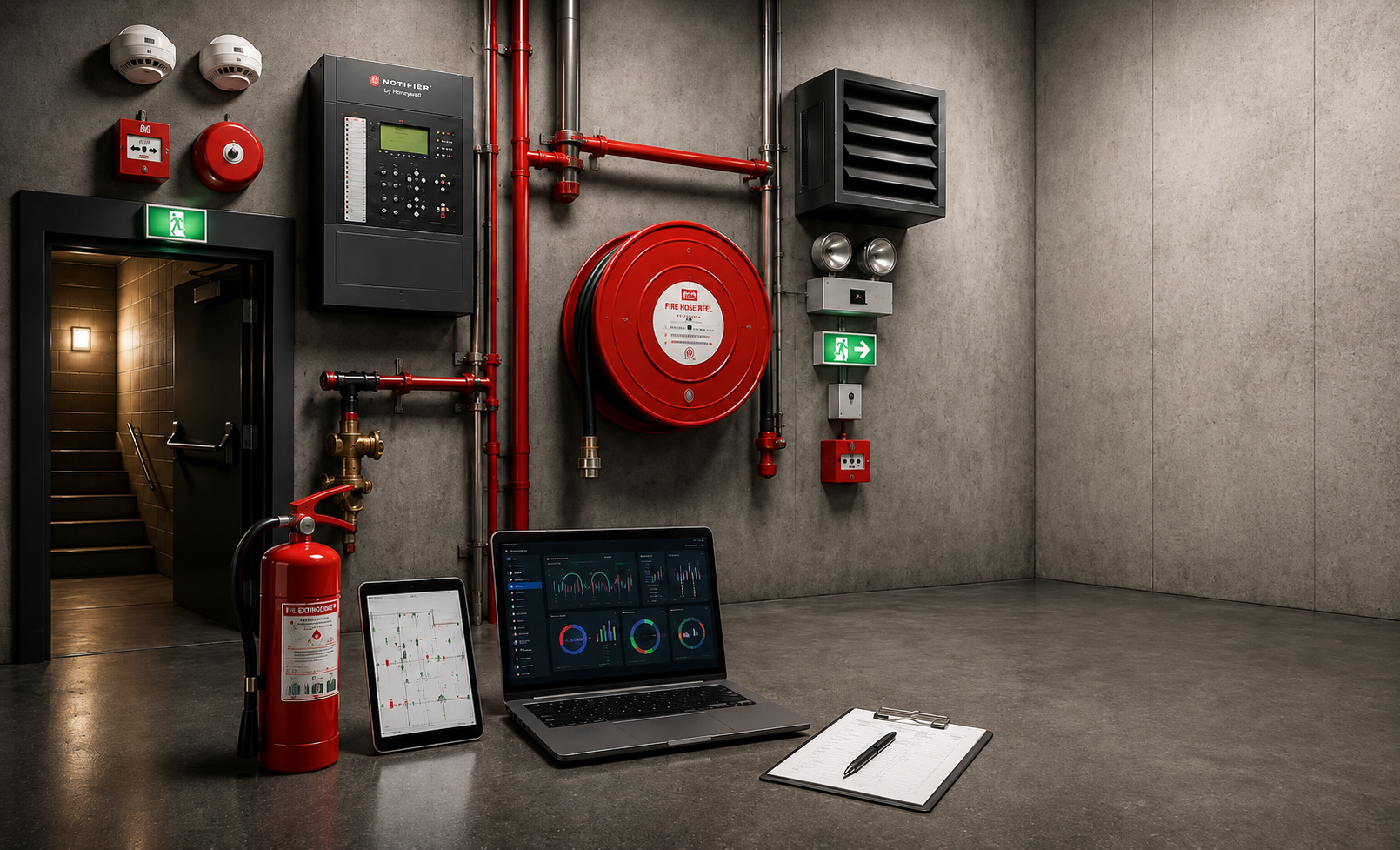
Firefox Training offers this nationally recognised qualification to experienced fire protection professionals seeking to advance their careers in fire systems design. The Diploma of Fire Systems Design reflects and supports the role of fire systems designers who prepare detailed technical designs and documentation for water-based fire suppression systems and/or fire detection and occupant warning systems. The qualification also includes a specialist stream for the annual certification of fire systems.
Throughout the qualification, students develop the advanced skills and knowledge required to research project requirements, interpret legislation and Australian Standards, evaluate fire system technologies, and produce compliant design documentation for a range of fire protection systems. The training is designed to enhance technical capability, support professional development, and prepare graduates for senior roles within the fire protection industry or further study in related disciplines such as mechanical engineering and fire engineering.
Course Structure
Firefox Training currently delivers the CPC50520 – Diploma of Fire Systems Design exclusively through Recognition of Prior Learning (RPL).
This assessment-only pathway is designed for experienced fire protection professionals who have already developed the skills and knowledge required through industry experience, previous training and workplace practice. Rather than completing traditional coursework, candidates demonstrate competency by providing evidence that they meet the requirements of each unit of competency.
Evidence may include examples of design documentation, project work, workplace records, previous qualifications, resumes, professional references and other supporting materials. Where required, candidates may also participate in professional discussions or undertake supplementary assessment activities to validate their knowledge and skills.
Throughout the process, candidates are supported by qualified assessors who review the submitted evidence and provide guidance to ensure all qualification requirements are met.
Units of Competency
For a student to be awarded their Diploma of Fire Systems Design qualification, they must successfully complete 12 units of competency, 4 core and 8 elective units.
Core Units
| Unit Code | Unit Name |
|---|---|
| CPCWHS2001 | Apply WHS requirements, policies and procedures in the construction industry |
| CPCSESF5001 | Define scope and hazard level of fire systems design projects |
| CPCSESF5002 | Research and interpret detailed fire systems design project requirements |
| CPCSESF5005 | Research and evaluate fire system technologies and components |
Elective Units
Group A — Water-Based Systems Elective Units
| Unit Code | Unit Name |
|---|---|
| CPCPCM4013 | Produce 2D architectural drawings using design software |
| CPCSESF5003 | Develop plans and methodology for fire systems design projects |
| CPCSESF5006 | Create detailed designs for fire sprinkler systems |
| CPCSESF5007 | Create detailed designs for hydrant and hose reel systems |
| CPCSESF5009 | Create detailed designs for fire systems’ water supplies |
| CPCSESF5010 | Provide documentation and support for fabrication of fire sprinkler systems |
| CPCSESF5011 | Provide design documentation and review and support fire system installation processes |
| CPCSESF5013 | Support commissioning processes and finalise fire systems design projects |
Group B — Detection & Warning Systems Elective Units
| Unit Code | Unit Name |
|---|---|
| CPCPCM4013 | Produce 2D architectural drawings using design software |
| CPCSESF5003 | Develop plans and methodology for fire systems design projects |
| CPCSESF5008 | Create detailed designs for fire detection and warning systems |
| CPCSESF5011 | Provide design documentation and review and support fire system installation processes |
| CPCSESF5013 | Support commissioning processes and finalise fire systems design projects |
Group C — Annual Certifier Elective Units
| Unit Code | Unit Name |
|---|---|
| BSBAUD513 | Report on a quality audit |
| CPCCBC4012 | Read and interpret plans and specifications |
| CPCSESF5014 | Conduct annual fire systems certification inspections |
| CPCSESF5015 | Assess documentation for annual fire systems certification inspections |
Group D — General Elective Units
| Unit Code | Unit Name |
|---|---|
| BSBOPS404 | Implement customer service strategies |
| BSBOPS505 | Manage organisational customer services |
| BSBPMG535 | Manage project information and communication |
| BSBPMG430 | Undertake project work |
| BSBWHS513 | Lead WHS risk management |
| CHCDIV001 | Work with diverse people |
| CPCCBC4012 | Read and interpret plans and specifications |
| CPCCBC5009 | Identify services layout and connection methods to medium rise construction projects |
| CPCCSV5009* | Assess the impact of fire on building materials |
| CPCPCM3024 | Prepare simple sketches and drawings |
| CPCPCM4013 | Produce 2-D architectural drawings using design software |
It is recommended that students are able to demonstrate language, literacy, and numeracy skills equivalent to Level 3 of the Australian Core Skills Framework (ACSF).
Recognition of Prior Learning & Credit Transfers
Recognition of Prior Learning (RPL) is an assessment-only process that recognises the skills and knowledge you have already gained through previous training, workplace experience or life experience. To be awarded competency through RPL, you must provide sufficient evidence to demonstrate that you meet the requirements of the relevant unit(s) of competency.
Our RPL process is designed to recognise existing industry expertise—not to retrain experienced professionals. By focusing on evidence of competency, we provide an efficient pathway for eligible candidates to obtain nationally recognised outcomes while continuing to work in the industry.
If you have previously completed a unit of competency through another Registered Training Organisation (RTO), you may be eligible for a Credit Transfer (CT). To apply, you will need to provide a certified copy of your Statement of Attainment or Qualification during the enrolment process. Where a Credit Transfer is granted, you will not be required to complete that unit again.
If you have any questions about the RPL process, your eligibility, or the evidence required to support your application, submit an Enquiry form on here or give us a call on 1300 119 141.
Qualification & Statement
On successful approval of the RPL of CPC50520 — Diploma of Fire Systems Design, students will be awarded a Certificate of Qualification. A Statement of Attainment will be issued to students who partially complete the Qualification.
Pathways & Career Opportunities
Students will develop skills that may lead to:
- Increased employability within the Fire Protection Industry.
- Further study to obtain higher levels of Qualifications which are relevant to a variety of fire occupations.
- Qualifications that may assist in applying for licences and accreditation in some states.
Fees & Payment
-
RPL Application from $7,450 — Group A, B or C
$1,500 — Required at submission of application
-
RPL Application from $8,100 — Group A & B Together
$1,500 — Required at submission of application
- Balance required prior to issuing Certificate of Qualification, once all units have been successfully completed.
-
Single Unit of Competency $675
With single units of competency, full payment is required at commencement of RPL application.
Further Information
Further information about this qualification can be found at training.gov.au/CPC50520.